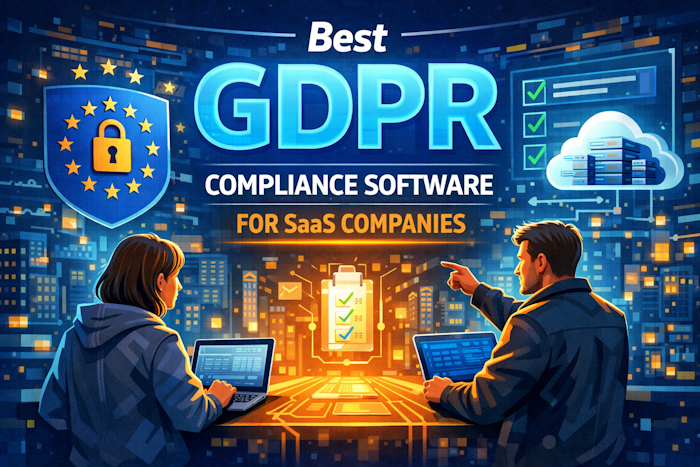

Best

The right GDPR platform turns your biggest EU market-entry risk into documented proof that you take data protection seriously - which is exactly what enterprise prospects, DPAs, and investors want to see.
Here's a story I hear every quarter. A SaaS company signs its first EU customer. The customer's DPO sends over a Data Processing Agreement. The SaaS company's legal team reviews it and realises they can't actually demonstrate GDPR compliance in any structured way. Their privacy policy was written by a lawyer two years ago. Their data processing records live in a Google Doc that nobody has updated since onboarding. Their cookie consent banner was installed by a developer who Googled "GDPR cookie popup" and picked the first result.
So the team scrambles. They buy a compliance platform - usually Vanta or Drata, because those are the names everyone knows. They add the "GDPR module." They check some boxes, upload some policies, and tell the customer they're "GDPR compliant." Except GDPR isn't a certification. There's no auditor who stamps your report. GDPR compliance is an ongoing operational obligation that covers everything from how you respond to data subject access requests to how you report breaches to supervisory authorities within 72 hours.
I spent the last two months evaluating every compliance platform that offers GDPR capabilities, specifically through the lens of what SaaS companies actually need. Not what looks good on a features page. What actually works when a DPA sends an inquiry, when a user submits a deletion request at 4pm on a Friday, or when your analytics provider gets breached and you need to assess cross-border data impact.
⚠
CONTEXT
What GDPR Actually Requires From SaaS Companies
Most compliance platforms treat GDPR as a checklist of policies to upload. That's like treating a driving test as a form to fill out. GDPR is operational. It requires ongoing processes, response mechanisms, and documented accountability. Here's what matters for SaaS companies specifically:
⚠ The GDPR requirements that catch SaaS companies off guard:
- Data Subject Rights (Articles 15-22): Your users can request access to, deletion of, portability of, and rectification of their personal data. You have 30 days to respond. If you can't find all the places their data lives across your stack, you can't comply.
- Records of Processing Activities (Art. 30): A living document listing every processing activity, its purpose, legal basis, data categories, recipients, retention periods, and transfer safeguards. Not a one-time spreadsheet. A maintained, auditable record.
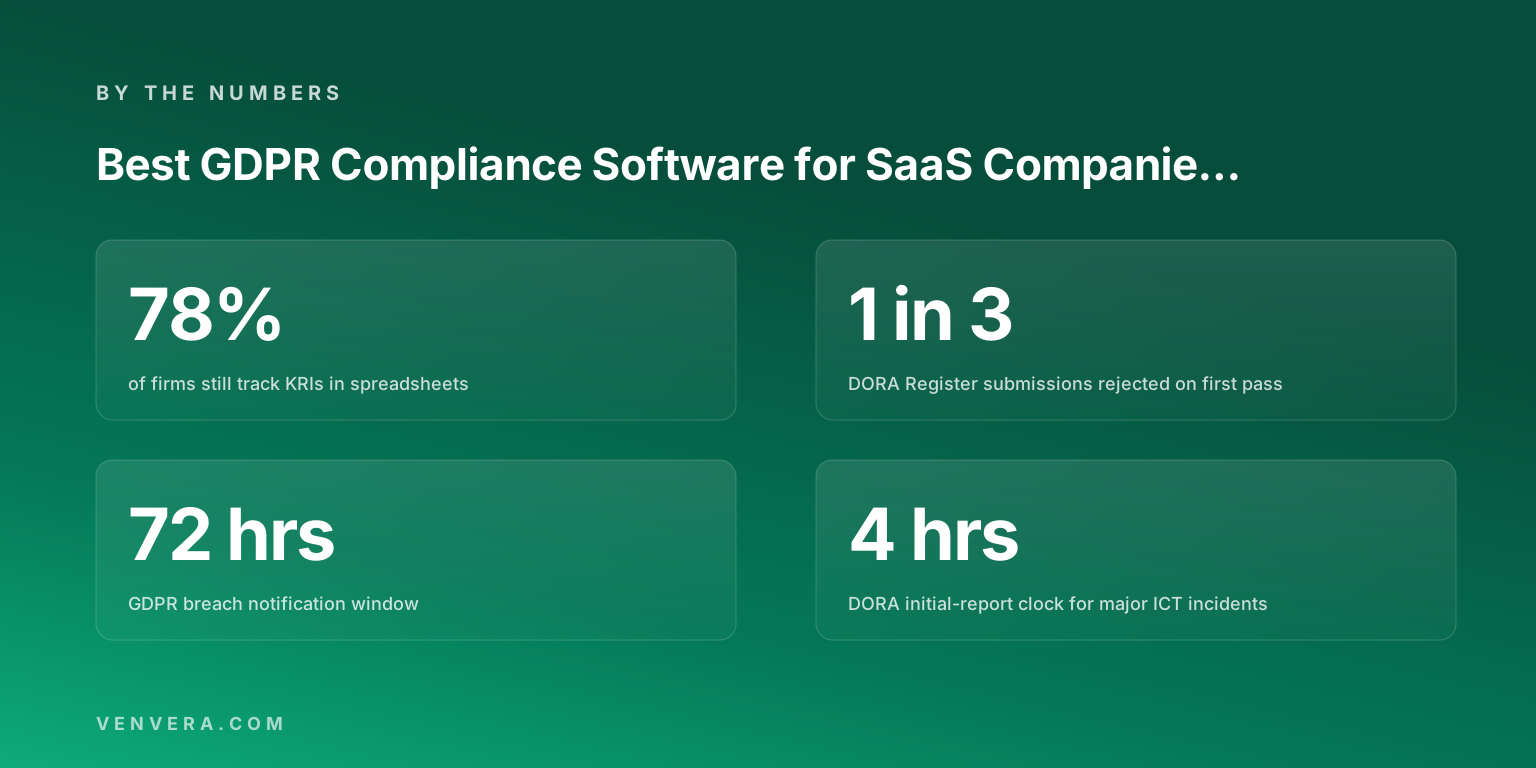
- 72-Hour Breach Notification (Art. 33): When a personal data breach occurs, you must notify the supervisory authority within 72 hours. You must also assess whether data subjects need to be notified directly (Art. 34). Your platform should track breach timelines and generate the required notifications.
- Data Protection Impact Assessments (Art. 35): For high-risk processing activities - which includes most SaaS products that profile users, process at scale, or use automated decision-making - you must conduct and document DPIAs.
- International Transfer Safeguards (Ch. V): Post-Schrems II, if you transfer EU personal data to the US or other third countries, you need documented Transfer Impact Assessments (TIAs), appropriate safeguards (SCCs, BCRs), and an understanding of the destination country's surveillance laws.
- Fines up to €20M or 4% of global turnover: The highest tier of GDPR fines. For a growing SaaS company, 4% of revenue is not a slap on the wrist.
🎯
EVALUATION CRITERIA
How I Scored Each Platform for GDPR
📋
Records of Processing (Art. 30)
Does the platform maintain a structured, up-to-date register of processing activities? Or does it just let you upload a PDF and call it done?
👤
Data Subject Rights Workflow
Can you track DSARs from intake to completion within the platform? With deadline tracking and response templates? Or is it a note in a general task list?
⏱
72-Hour Breach Notification
Does the platform enforce the 72-hour timeline with structured breach assessment, supervisory authority notification generation, and data subject communication tracking?
📈
DPIA Management
Can you create, maintain, and update Data Protection Impact Assessments within the platform? With risk scoring and mitigation tracking?
🌐
Cross-Border Transfer Documentation
Does the platform help you document international data transfers with TIAs and appropriate safeguards? Post-Schrems II, this is where DPAs look first.
🇪🇺
EU Data Hosting
Where does your GDPR compliance data live? If your data protection records are hosted in a US data centre, that's an irony that supervisory authorities notice.
📊
PLATFORM REVIEWS
Six Platforms Reviewed for GDPR SaaS Compliance
I tested each of these platforms specifically for their GDPR capabilities. Not their SOC 2 features, not their integration counts - their ability to help a SaaS company meet GDPR obligations in practice. The ranking surprised me.
BEST FOR GDPR
1. Venvera - GDPR as an Operational Programme, Not a Checklist
Venvera treats GDPR the way it should be treated: as an ongoing operational obligation with workflows, timelines, and accountability. Their GDPR module includes structured Records of Processing Activities, Data Subject Rights request tracking with deadline management, breach notification workflows aligned to the 72-hour timeline, DPIA templates with risk scoring, and cross-border transfer documentation.
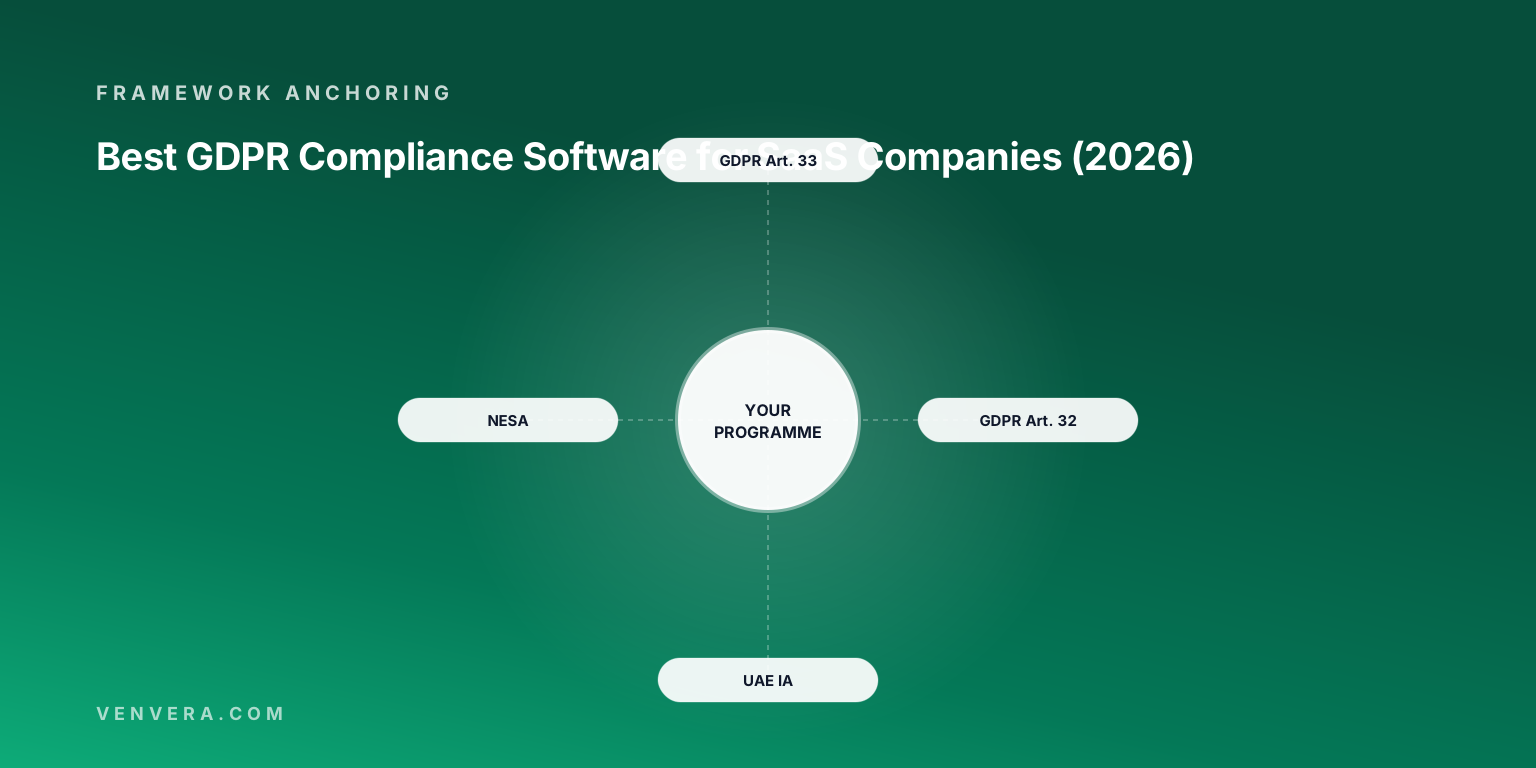
But the real advantage for SaaS companies is what happens when GDPR isn't your only framework. Most SaaS companies that need GDPR also need SOC 2 (for enterprise sales), ISO 27001 (for European enterprise customers), and increasingly NIS2 (if they serve essential or important entities). Venvera supports 15 frameworks with 150+ cross-framework mappings. Implement one security policy for GDPR Article 32 and it automatically maps to ISO 27001 Annex A.9, SOC 2 CC6.1, and NIS2 Article 21. One control documented, four frameworks partially satisfied.
The pricing makes this practical: €399/month for one framework, €899/month for three. Published on the website. No sales call. Compare that to $25,000-45,000/year on per-framework platforms for the same three frameworks. For SaaS companies at any stage, that's a meaningful difference.
EU data hosting in Amsterdam by default with AES-256-GCM encryption. For a GDPR compliance platform, hosting your data protection records in the EU isn't a nice-to-have - it's table stakes. Venvera is the only platform on this list where EU hosting is the default, not an upgrade.
The honest trade-off: Venvera's automated integration library is growing but smaller than Vanta's 200+ connectors. If your GDPR strategy revolves entirely around automated evidence collection from cloud infrastructure, Vanta has more connectors. But if your strategy is about managing GDPR as an operational programme - records of processing, DSARs, breach notifications, DPIAs, and cross-framework efficiency - Venvera delivers more for less.
Best for: SaaS companies that need GDPR alongside other frameworks. Especially strong for EU-focused companies, companies expanding into EU markets, and teams managing GDPR + SOC 2 + ISO 27001 + NIS2 simultaneously. Published pricing from €399/month.
2. Vanta - Deep Integrations, Shallow GDPR
Vanta is the compliance platform everyone has heard of, and for good reason. 200+ cloud integrations, continuous monitoring, and a mature SOC 2 engine that's been refined over years. They do offer a GDPR module, which is more than can be said for their NIS2 or DORA coverage.
The GDPR module covers the basics: policy templates, a processing activities register, and some control mapping. But it's architecturally designed as an extension of their SOC 2 engine. GDPR isn't a controls framework - it's a rights-based regulation with operational obligations. Vanta's approach of "map controls to GDPR articles" gives you documentation, but it doesn't give you DSAR workflow management with deadline tracking, structured breach notification timelines, or DPIA creation and maintenance tools.
Pricing starts at $12,000-15,000/year for SOC 2, with each additional framework adding $5,000-8,000. No published pricing. Multiple users report 20-40% renewal increases. US-hosted by default.
Best for: US-based SaaS companies that primarily need SOC 2 and want to add GDPR as a secondary framework. Deep cloud integrations. Not ideal if GDPR is your primary compliance obligation.
3. Drata - Beautiful Interface, Controls-First Approach
Drata has the best user interface in the compliance market. The dashboard is clean, the control status views are intuitive, and the onboarding flow is polished. Their GDPR support is similar to Vanta's: controls mapped to GDPR articles, policy templates, and a processing register.
Drata's custom framework builder is a genuine differentiator. If you have specific GDPR requirements that don't map neatly to their standard module, you can create custom controls and assessments. For SaaS companies with non-standard processing activities, that flexibility matters. But it also means you need someone on your team who understands GDPR well enough to build those custom controls correctly.
Like Vanta, Drata's GDPR offering is designed as an add-on to their core SOC 2 product. The operational GDPR workflows - DSAR tracking, breach notification timelines, DPIA management - aren't purpose-built. Pricing is per-framework, unpublished, and US-hosted by default with EU hosting as an option.
Best for: SaaS companies that want a polished user experience, need custom GDPR control definitions, and are primarily focused on SOC 2 with GDPR as a secondary need.
4. Sprinto - Budget-Friendly Starter Kit
Sprinto makes compliance accessible for early-stage SaaS companies. Their GDPR module covers the fundamentals: policy management, processing records, and basic compliance tracking. For a pre-Series B startup that needs to demonstrate basic GDPR awareness to EU customers, Sprinto gets you 70% of the way there affordably.
The limitation is depth. Sprinto's GDPR module is designed for simplicity, which means limited DSAR workflow management, basic breach notification tracking, and minimal cross-framework mapping. If your EU customer's DPO asks for detailed DPIA documentation or Transfer Impact Assessments, Sprinto's GDPR module won't generate them for you.
Starting under $10,000/year for SOC 2, with GDPR as an add-on. Only four frameworks supported total. Most companies I know that started on Sprinto migrated within 18-24 months as their compliance needs matured.
Best for: Pre-Series B SaaS startups that need basic GDPR documentation quickly and cheaply. Plan to migrate when compliance requirements grow.
5. Secureframe - Human Support Compensates for Platform Gaps
Secureframe's dedicated compliance manager is their genuine competitive advantage. For SaaS teams navigating GDPR for the first time - especially teams without a DPO or in-house privacy expertise - having a human expert to ask "does this processing activity need a DPIA?" or "how should we handle this cross-border transfer?" is worth real money.
The GDPR module itself is comparable to Vanta and Drata: controls-based approach, policy templates, processing register. The human guidance fills gaps that the platform doesn't cover. But you're paying for both - per-framework platform pricing plus the implicit cost of that human support. And when the compliance manager moves on or your needs scale beyond their bandwidth, the platform alone may not be enough.
Best for: SaaS companies doing their first GDPR compliance effort who value human expertise over self-service tooling. Especially helpful for US-based companies entering EU markets for the first time.
6. StrikeGraph - Maximum Flexibility, Maximum Effort
StrikeGraph's risk-based methodology is genuinely interesting for GDPR. Instead of pre-defined controls mapped to articles, you define your data processing risks and build compliance measures around them. This aligns well with GDPR's risk-based approach to data protection - the regulation itself asks you to implement measures "appropriate to the risk."
The downside is the same as with NIS2: you're doing the interpretation yourself. You need to understand GDPR well enough to define the right risks, create appropriate assessments, and build the right workflows. StrikeGraph gives you the canvas. You need to bring the painting. For SaaS companies with a dedicated DPO or privacy counsel, that flexibility is powerful. For teams without privacy expertise, it's an invitation to build something that looks compliant but misses key requirements.
Best for: SaaS companies with in-house privacy expertise who want a flexible platform they can mould to their specific data processing activities. Not practical for teams without dedicated GDPR knowledge.
📊
HEAD TO HEAD
The GDPR Feature Comparison for SaaS
| GDPR Requirement | Venvera | Vanta | Drata | Sprinto | Secureframe | StrikeGraph |
|---|---|---|---|---|---|---|
| GDPR module | ✓ Purpose-built | ✓ Controls-based | ✓ Controls-based | ◯ Basic | ✓ Controls-based | ◯ DIY |
| Records of Processing (Art. 30) | ✓ Structured register | ◯ Template-based | ◯ Template-based | ◯ Basic | ◯ Template-based | ◯ Manual |
| DSAR workflow tracking | ✓ Full with deadlines | ✗ Not available | ✗ Not available | ✗ Not available | ✗ Not available | ✗ Not available |
| 72h breach notification workflow | ✓ Structured timeline | ◯ Generic incidents | ◯ Generic incidents | ✗ Basic | ◯ Generic incidents | ✗ Not available |
| DPIA management | ✓ Templates + risk scoring | ◯ Basic | ◯ Custom controls | ✗ Not available | ◯ Guided | ◯ Manual |
| Cross-framework mapping | ✓ 150+ mappings | ◯ Limited | ◯ Limited | ✗ Minimal | ◯ Basic | ◯ Manual |
| Total frameworks | 13 | 7-8 | 6-7 | 4 | 5 | 6+ |
| NIS2 / DORA / EU AI Act | ✓ All three | ✗ | ✗ | ✗ | ✗ | ✗ |
| EU data hosting | ✓ Amsterdam (default) | ✗ US-based | ◯ US default | ✗ | ✗ | ✗ |
| Published pricing | ✓ Yes | ✗ | ✗ | ◯ Partial | ✗ | ✗ |
| 3-framework annual cost | ~€10.8K | $25-45K | $20-35K | $15-25K | $20-35K | Varies |
💰
PRICING REALITY
The SaaS Compliance Cost Trap (And How to Avoid It)
Here's the pricing pattern I see destroy SaaS companies' compliance budgets. You start with GDPR because your first EU customer asks for it. Six months later, a US enterprise prospect requires SOC 2. Six months after that, a German client wants ISO 27001. Suddenly you're managing three frameworks on a per-framework platform, and the bill has tripled.
| Year | Per-Framework Platform | Venvera (3 frameworks) |
|---|---|---|
| Year 1: GDPR only | ~$10,000-15,000 | €10,788 (3 frameworks included) |
| Year 2: GDPR + SOC 2 | ~$22,000-28,000 | €10,788 |
| Year 3: GDPR + SOC 2 + ISO 27001 | ~$35,000-50,000 | €10,788 |
| Three-year total | $67,000-93,000 | €32,364 (~$35,000) |
| Three-year savings | - | $32,000-58,000 saved |
For a SaaS company, $32,000-58,000 over three years is 6-12 months of a senior hire. Or three years of your cloud infrastructure bill. Or the difference between extending your runway by a quarter and not. Compliance tooling is supposed to protect your business, not bleed it dry.
🔗
THE BIGGER PICTURE
GDPR Is Just One Piece of the EU Regulatory Stack
If you're a SaaS company operating in the EU market, GDPR isn't your only compliance obligation - it's the first one. The EU's regulatory landscape has expanded dramatically since 2024:
🇪🇺 The EU regulatory stack for SaaS in 2026:
- GDPR - data protection and privacy (if you process EU personal data)
- NIS2 - cybersecurity for essential and important entities (if you provide digital services to regulated sectors)
- DORA - digital operational resilience for financial entities (if you serve banks, insurers, or financial institutions)
- EU AI Act - AI system regulation (if your product uses AI or machine learning in certain ways)
- ISO 27001 - information security management (not legally required, but universally demanded by EU enterprise customers)
The overlap between these regulations is enormous. GDPR Article 32 security measures map directly to NIS2 Article 21 risk measures. DORA's ICT risk management requirements parallel both. ISO 27001's Annex A controls satisfy requirements across all of them. If your platform maps these connections, implementing one strong security programme satisfies 60-70% of multiple frameworks simultaneously.
If your platform treats each framework as a silo, you're doing the same work three or four times. You're paying for three or four frameworks individually. And you're maintaining three or four separate compliance programmes that are actually two-thirds the same thing. That's not a compliance strategy. It's a cost centre that grows every time Brussels passes a new regulation.
✅
DECISION GUIDE
My Recommendations for SaaS Companies
After testing all six platforms through the specific lens of GDPR for SaaS, here's what I'd tell a founder over coffee:
GDPR as primary need
Venvera. Purpose-built GDPR with DSAR workflows, breach notification timelines, DPIA management, and processing registers. EU-hosted by default. €399/month. The only platform that treats GDPR as an operational programme, not a controls checklist.
GDPR + SOC 2 + ISO 27001
Venvera. Three frameworks at €899/month with 150+ cross-mappings. The economics aren't close - you'd spend $35,000-50,000/year elsewhere for the same frameworks. Plus you're future-proofed for NIS2, DORA, and the EU AI Act.
SOC 2 primary + GDPR secondary
Vanta or Drata. If SOC 2 is your main compliance obligation and GDPR is a "nice to have" for EU expansion, their GDPR modules cover the basics alongside strong SOC 2 engines.
First compliance effort + no expertise
Secureframe. The dedicated compliance manager is genuinely helpful for teams with zero privacy expertise. Expensive, but the human guidance fills real gaps during your first year.
GDPR is eight years old now. The supervisory authorities have gotten better at enforcement, the fines have gotten bigger, and the expectations have gotten clearer. A SaaS company in 2026 can't treat GDPR as a policy document you upload and forget. It's an operational obligation that requires workflows, deadlines, and continuous accountability. The platform you choose should reflect that reality - not pretend that mapping some controls to GDPR articles is the same as compliance.
GDPR Compliance That Goes Beyond Checkboxes
DSAR workflow tracking. 72-hour breach notification. DPIA management. Structured processing registers.
15 frameworks with 150+ cross-mappings. EU-hosted in Amsterdam. From €399/month. Published pricing, no sales calls.
Book a Demo →Last updated: March 2026. Feature and pricing information based on publicly available data and hands-on evaluation. GDPR enforcement varies by supervisory authority. Contact each vendor for current pricing.